

-
call us
0086 13559245184 -
email us
sales@fortunepart.com
call us
0086 13559245184email us
sales@fortunepart.com
Oct, 2026
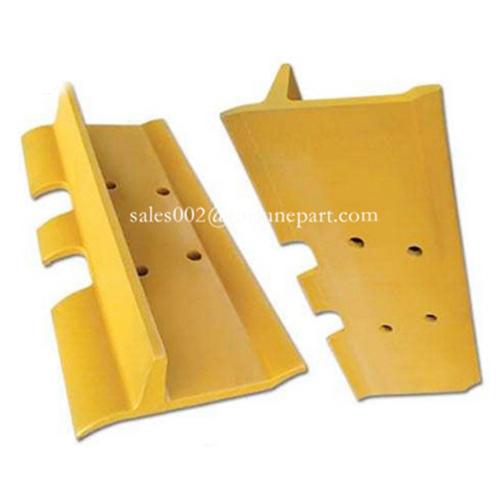
Track shoes look simple: a steel plate bolted to the chain with a bar underneath. In practice, shoe width and grouser type decide how well a crawler machine grips the ground, how much it sinks, how fast the undercarriage wears, and whether the surface it works on survives the job. The same machine can be badly matched to soft mud and perfectly matched to rock, simply because of the shoes fitted. This guide explains what each choice controls, then shows how to match width and grouser type to mud, rock, and finished surfaces. It helps to first understand how excavator track shoes and pads are organized by machine class and shoe specification, because width and grouser type are part of the part identity, not an afterthought.
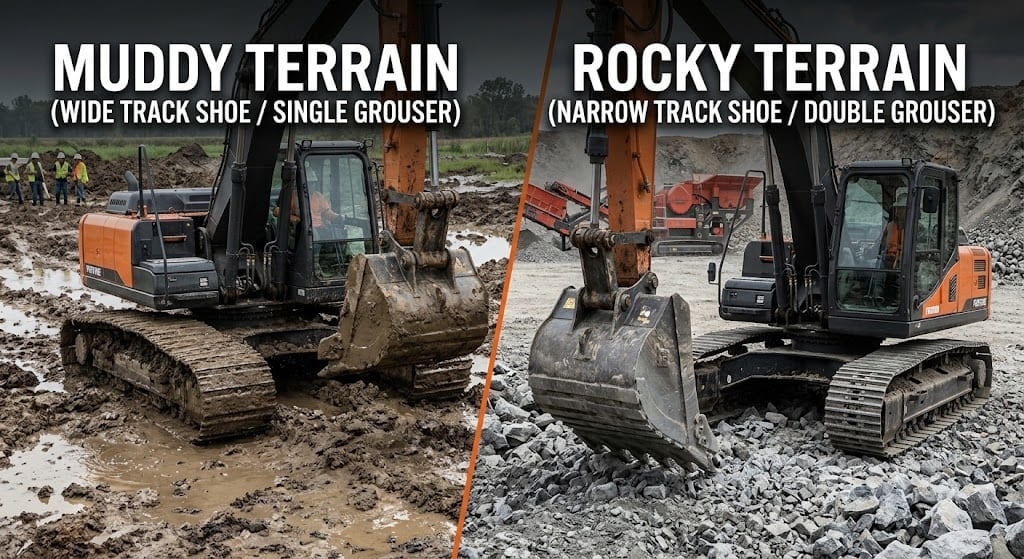
Track shoe selection comes down to two choices that work together:
These two choices pull in different directions. A wide shoe with a tall grouser is good in soft ground but heavy and aggressive on hard surfaces. A narrow shoe with a low grouser is efficient on compact ground but sinks and spins in mud. Most selection mistakes come from optimizing one variable and ignoring the other.
Shoe width is about how the machine weight is distributed. In soft conditions, flotation matters more than anything else. On hard, compact surfaces, a narrower shoe reduces load on the chain and reduces the effort needed to turn.
| Ground Condition | Width Direction | Reason |
|---|---|---|
| Wet mud and soft soil | Wider than standard | Lower ground pressure and better flotation |
| Loose sand and gravel | Wider, within machine limits | Reduces sinking and improves stability |
| Firm soil and clay | Standard width | Balanced traction without unnecessary load |
| Rock and hard compacted ground | Standard or narrower | Less shoe area to carry impact and less turning effort |
| Finished or paved surfaces | Standard width with protective pads | Protects the surface without changing machine geometry |
Wider is not automatically better. Every increase in width adds weight to the chain and increases the load on pins, bushings, and rollers. The right shoe is the narrowest one that still gives acceptable flotation in the working conditions.
The grouser is the bar that penetrates the ground. Its height and profile decide traction, and also how much damage the machine does to the surface it drives on.
| Grouser Type | Best For | Considerations |
|---|---|---|
| Standard single grouser | General excavation, soil, clay | Good balance of grip and wear; common default choice |
| Triple grouser | Firm ground, travel comfort, grading work | Smoother ride; less aggressive bite in soft ground |
| High grouser | Mud, loose fill, slopes | Strong penetration; high bending load on the shoe and chain |
| Flat / street pad | Paved yards, concrete, finished surfaces | Low ground damage; reduced traction in soft ground |
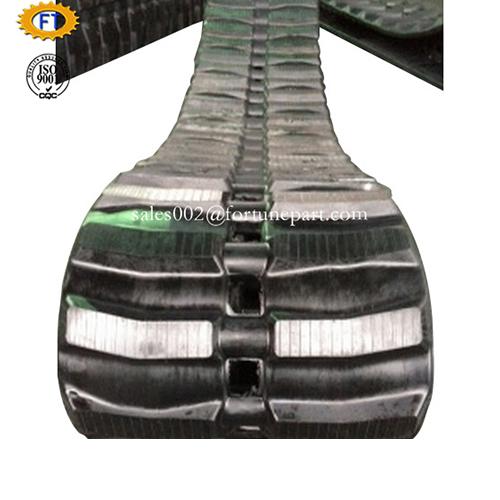
| Rubber or clip-on pad | Road travel, indoor or finished floors | Protects the surface; requires fitting and removal time |
Grouser height also affects undercarriage life. A taller grouser gives more bite but creates a longer lever arm, so impacts on rock transmit more load into the shoe, chain, and rollers. In hard rock, a moderate grouser with strong shoe plate is usually more economical than an aggressive one that transfers shock into the chain.
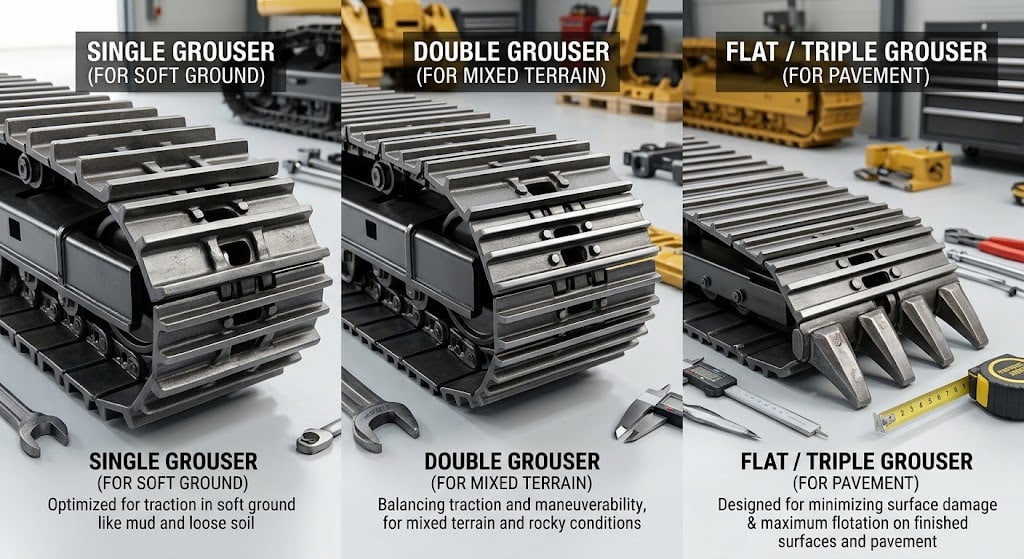
Working in rock changes the priorities. Traction is rarely the problem; wear and impact are. The shoe must survive constant contact with sharp, hard material without cracking or wearing through.
For machines that work across mixed conditions, owners often keep two shoe sets and change them by season or by job type. It sounds like extra cost, but matching the shoe to the ground usually costs less than replacing chain and rollers early. This is also why serious buyers compare the exact shoe specification for their machine class rather than ordering by appearance, and why checking a track shoe pad for Caterpillar crawler dozers and excavators against the machine model and serial range is the practical way to confirm width, pitch, and grouser type before ordering.
Work on asphalt, concrete, or finished ground is a different problem. The machine must move without tearing up the surface, and the shoe must survive the low-traction, high-friction contact that comes with it.
Surface protection is not only about appearance. Damaged pavement creates claims and repair costs that usually exceed the price of a set of pads, so matching the shoe to the surface is a commercial decision as much as a technical one.
The table below combines both variables for common job types. Treat it as a starting point and confirm the final specification against the machine manual and the supplier's data.
| Job Type | Width | Grouser | Note |
|---|---|---|---|
| Soft mud and swampy ground | Wider | High grouser | Flotation first, then grip |
| General earthmoving | Standard | Standard single | Balanced default setup |
| Rock and quarry work | Standard or narrower | Standard with reinforced plate | Prioritize wear and impact resistance |
| Grading and fine work | Standard | Triple grouser | Smoother travel and control |
| Paved yards and road travel | Standard | Flat or rubber pad | Protect the surface |
| Mixed site, changing ground | Standard | Standard single | Compromise, or keep a second shoe set |
Before ordering, prepare the machine model and serial number, the current shoe width and pitch, the grouser type and height, the bolt hole pattern, and the working conditions the machine faces. Suppliers can confirm the correct specification much faster when these details are included.
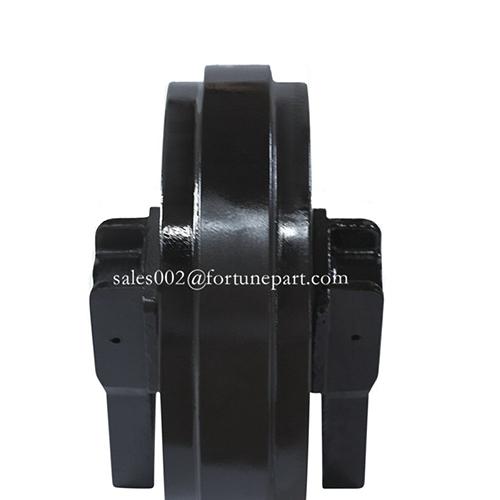
Because shoes, chain, rollers, and sprockets wear together, it is usually worth reviewing the whole undercarriage when shoes are replaced. Teams that plan this way often review the complete undercarriage parts range while specifying new shoes, so worn rollers or a stretched chain can be replaced in the same job instead of causing a second breakdown shortly afterwards.
Usually yes, because wider shoes reduce ground pressure and improve flotation. Confirm the width is within the range recommended for your machine.
A standard grouser on a thicker, reinforced shoe plate is usually the more economical choice in rock, since wear and impact matter more than bite.
Not ideally. Standard grousers damage paved surfaces. Rubber or flat pads are the practical solution when the machine must work on finished ground.
Measure the shoe width, the pitch between chain links, and the bolt hole spacing, or read the specification from the parts manual for your machine model.
They add weight and load to the chain and rollers, so an unnecessarily wide shoe can shorten component life. The goal is the narrowest shoe that still performs in your conditions.
Track shoe selection is a two-part decision: width controls flotation and load, grouser type controls grip and surface damage. Match the width to how soft the ground is, match the grouser to how much bite and protection the job needs, and confirm the specification against your machine model before ordering. When shoes are replaced, check the chain, rollers, and sprockets in the same inspection. A machine on correctly matched shoes travels better, wears more slowly, and damages less of the ground it works on.
Contact fortunepart.com with your machine model, serial number, and the ground conditions you work in, and we will help you confirm the right track shoe width and grouser type before you order.
categories
recent posts
tags
Xiamen Fortune Industrial Co., Ltd.
Room 402,No.7,Kangleli,Huli District, Xiamen, Fujian, China
Tel : 0086 13559245184
Fax : 0086-592-7072790
Whatsapp/Wechat : +8613559245184
Contact Person: James Xie
E-mail: sales@fortunepart.com
Microsoft Teams: part-sales
scan to wechat: