

-
call us
0086 13559245184 -
email us
sales@fortunepart.com
call us
0086 13559245184email us
sales@fortunepart.com
Oct, 2026
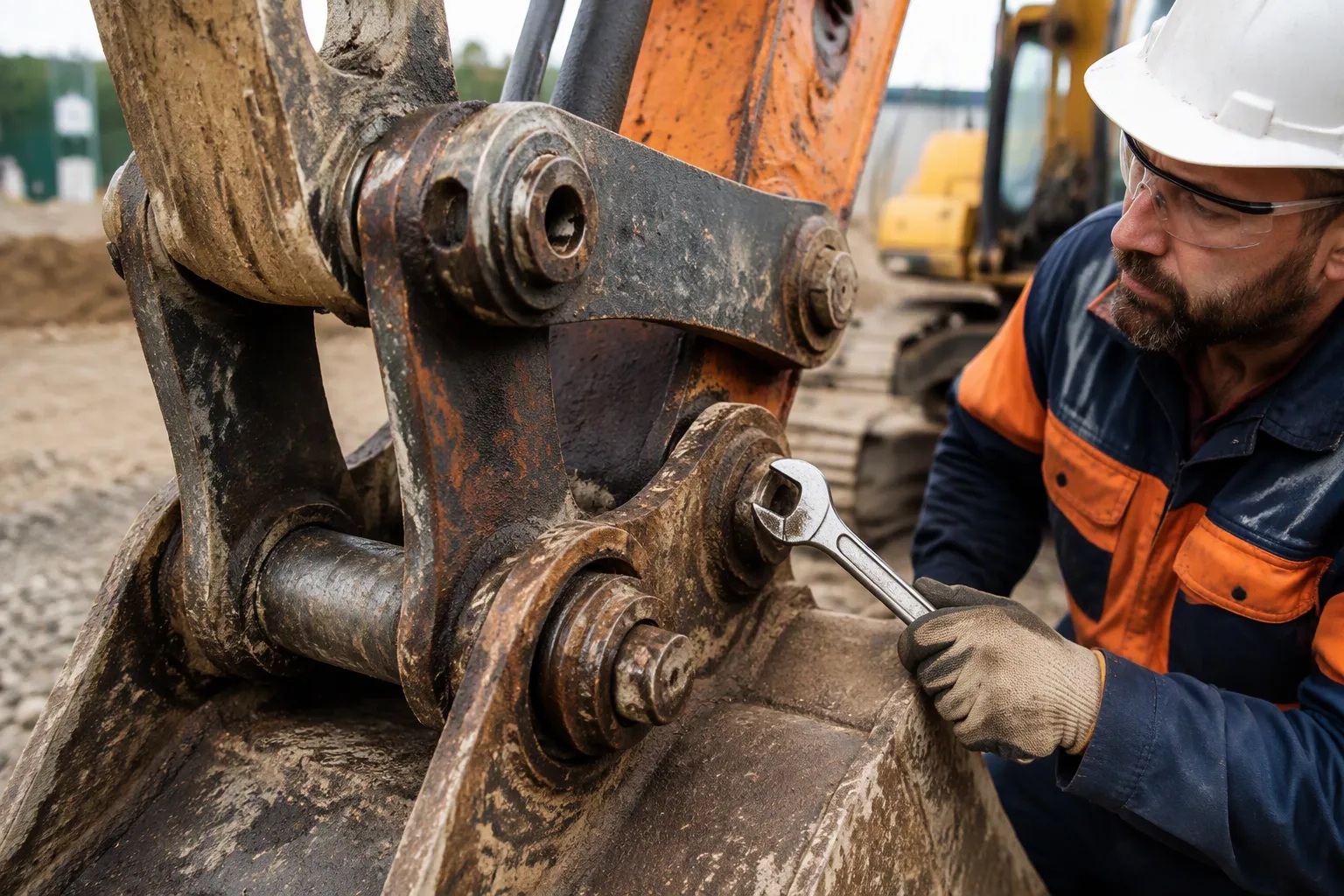
You will likely face one of five primary bucket linkage problems during heavy-duty operations: worn pins and bushings, cracked or bent H-links and side links, elongated bucket ears and worn bores, loose retainers, or binding and misaligned linkage components. Constant load cycling, abrasive grit, severe overloading, and missed greasing schedules drastically accelerate this mechanical wear. Each problem outlined below covers specific symptoms, underlying root causes, and a reliable parts-based fix. Early and proactive repair protects your bucket cylinder, stick, and overall boom geometry, while sourcing quality Excavator Parts Bucket Link Parts ensures that the repair remains durable under harsh working conditions.
During demanding heavy-duty operations, excavator owners will likely face one of five primary bucket linkage problems: worn pins and bushings, cracked or bent H-links and side links, elongated bucket ears with worn bores, loose retainers, or binding and misaligned linkage components. These issues are not just minor inconveniences; they directly impact your machine's digging efficiency and operational safety.
The root causes of these failures are often a combination of harsh working environments and operational stress. Constant load cycling, abrasive grit penetrating the joints, severe overloading during rock breaking, and missed greasing schedules drastically accelerate mechanical wear. Furthermore, improper bucket sizing or poor welding repairs can create severe stress concentrations, leading to sudden structural fatigue.
To diagnose these issues early, operators should look for specific symptoms. Excessive play or "slop" in the bucket indicates worn pins and bushings. Visible cracks or bending along the linkage arms signal structural failure. If the bucket ears are elongated, the pin will fail to hold torque, causing misalignment. Additionally, if the linkage binds or feels sluggish, it often points to a bent component or a lack of proper lubrication.
Ignoring these symptoms leads to catastrophic consequences. A worn linkage transfers abnormal shock loads to the hydraulic cylinder, stick, and overall boom geometry. This not only destroys the alignment of your primary digging components but also leads to extremely costly downtime and major structural repairs.
Early and proactive repair is the key to protecting your fleet. By addressing worn components immediately, you preserve the integrity of your hydraulic system. When it's time to replace parts, sourcing premium Excavator Parts Bucket Link Parts ensures that the repair remains durable under the harshest working conditions. High-quality, heat-treated pins, reinforced H-links, and precise bushings restore factory geometry and get your heavy machinery back to peak performance.
Replace worn pins and bushings as a matched set immediately to keep the linkage assembly perfectly aligned and prevent further premature structural damage.
Renew bent H-links and side links together to completely restore correct factory geometry, digging angles, and bucket control.
Use specialized line boring and precise welding to fix elongated bucket ears and worn bores for a secure fit and a long-lasting structural repair.
A loose, sloppy bucket is your very first warning sign of joint degradation. You will typically hear a distinct metallic knocking or clunking sound during the bucket curl cycle, and the bucket will visibly drift or struggle to hold a precise grade. Deep grooves, polished flat spots, or surface flaking on the steel pins confirm that the joint is completely past saving. One-sided or asymmetric wear usually points to uneven lateral loading, a bent pin, or lost coaxiality in the structural ear plate holes.
Poor or inadequate lubrication drives the vast majority of this metal-on-metal damage. High-quality grease forms a protective, viscous film between the mating metal surfaces, acting as a vital shock absorber against impact loads. Missed greasing intervals, over-greasing that blows out rubber seals, and fine grit intrusion all destroy that protective film and drastically accelerate frictional wear.
Always measure before you decide on a corrective action path. Compare the measured pin-to-bushing radial clearance against these standard operational thresholds:
|
Check Parameter |
New / Acceptable Tolerance |
Action Required: Replace |
|---|---|---|
|
Assembly radial clearance |
0.1–0.3 mm |
Above 0.5 mm |
|
Field pry test (pin end play) |
Under 5 mm total shake |
Over 5 mm total shake |
Shimming only buys temporary time under light loads. Once joint clearance exceeds safe operational tolerance, follow this proven installation fix:
Always replace excavator pins and bushings together as a matched set to preserve ideal coaxial alignment.
Measure the structural housing bore precisely with an inside micrometer and the replacement pin with an outside micrometer.
Freeze the steel pin below −20 °C and gently press it into a thermally heat-expanded bushing to achieve a proper interference fit.
Coat the entire assembled joint thoroughly with high-temperature molybdenum grease, then verify smooth, bind-free rotation with zero lateral shake.
Excessive operational stress and heavy overloading far beyond manufacturer limits will permanently bend or twist H-links and side links. Heavy side-loading during rapid swing cycles, accidental strikes against buried utilities, and enlarged pin holes all twist the overall excavator frame out of alignment. Watch carefully for a bucket that rocks excessively even with tight pins, twisting motions during bucket curl, egg-shaped distorted bores, and grease that squirts out sideways instead of distributing across the bearing surface. Fine hairline fractures along structural weld seams near the center tube signal imminent catastrophic failure.
The H-link effectively transmits massive hydraulic cylinder force straight to the bucket; the side links, commonly called tipping links, act as vital stabilizing pivot arms. Restoring both components simultaneously re-establishes correct kinematic geometry and bucket control. Premium Fortune Excavator Bucket H Links are manufactured strictly to OEM quality standards, ensuring a precise fit for Komatsu PC200-7, PC300-7/8, PC400-7, and Hitachi ZX200, ZX330-5G, and EX400 excavators, including popular models like the Komatsu PC200-7 PC300-8 Excavator H Link. When executing repairs, follow these guidelines:
Replace the central H-link and both matching side links together as a complete structural set.
Renew all connecting pins and bushings at every single pivot point within the linkage and pin assembly.
Choose heavy-duty, corrosion-protected bucket link components if operating in highly dusty, muddy, or humid job sites.
Re-grease all tipping link pivots strictly on schedule and recheck frame alignment after any major structural repair.
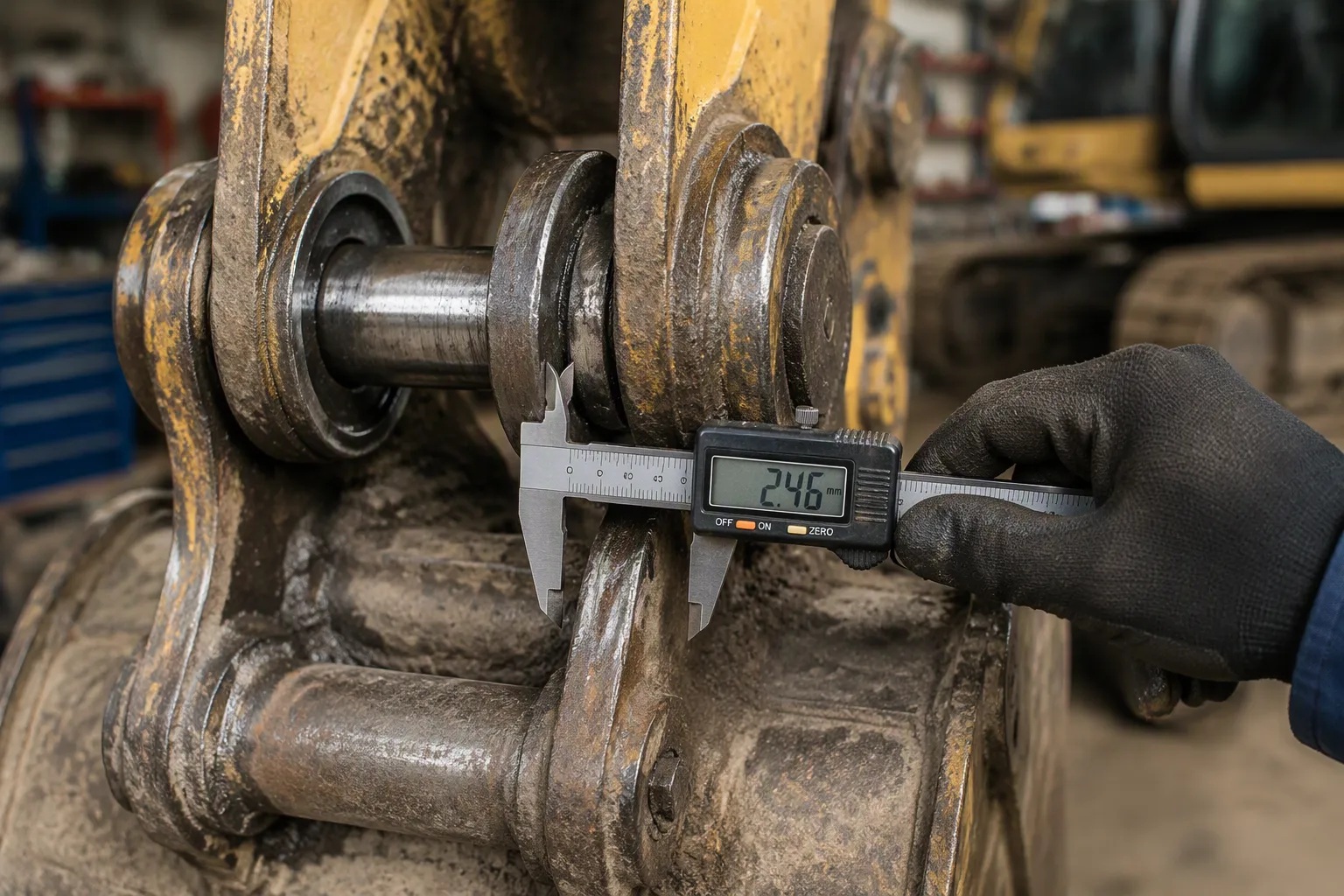
Worn, distorted linkage geometry places severe, abnormal strain on the entire excavator bucket hydraulic system. Poor linkage geometry drastically reduces breakout digging force and soil penetration efficiency, forcing the main bucket hydraulic cylinder to work significantly harder to achieve the exact same cut. Repairing and aligning the mechanical linkage is therefore an essential part of preventing premature bucket hydraulic failures, rather than treating it as a completely separate maintenance job.
Environmental corrosion and continuous, heavy load cycling gradually open up and deform the bucket ears and structural bores over time. Each digging cycle transmits intense shock loads straight through the linkage pins, causing the steel bore to slowly lose its original circular shape. You will notice uneven bucket curling behavior, an audible clunking noise while swinging or moving the bucket, and visible accelerated wear on adjacent linkage components. These symptoms typically arise when worn, loose, or damaged ear components cause mechanical binding, excessive joint play, or immense strain on the hydraulic rams.
Always measure the internal bore diameter thoroughly before choosing a repair path. Refer to the diagnostic guide below:
|
Condition Observed on Job Site |
Recommended Professional Repair Path |
|---|---|
|
Housing structure still round and within acceptable manufacturing tolerance |
Replace connecting pins and bushings only |
|
Bushing fit is borderline loose, but main structural ear housing is sound |
Repair or rebuild worn retaining features and locking tabs |
|
Structural bore is heavily elongated, misaligned, or parent metal is deeply gouged/damaged |
Weld up worn cavities and precision line bore to fully restore true centerline and original diameter |
|
Visible structural cracks, severe thermal distortion, or repeated joint component failures |
Completely reevaluate the entire attachment joint for deeper structural fatigue and plate replacement |
Professional line boring effectively restores bore size, concentric shape, and precise alignment back to original factory specifications. Technicians build up the damaged parent metal via specialized welding, then machine it back down to exact dimensions referencing the true ear centerline. Sourcing quality excavator parts bucket link parts helps restore proper linkage geometry and keeps the entire pivot joint working smoothly as designed.
Worn bushings, bent side links, or loose hardware rapidly push the entire excavator linkage assembly out of proper alignment. Loose, damaged, or missing retainer hardware then causes failures to escalate extremely fast. Watch out for abnormal lateral side movement at pivot joints, fresh reddish-brown metal dust accumulating around a pivot point, and a sharp, metallic knock replacing a previously quiet joint. A loose retainer bolt or snap ring can back out completely unnoticed until the heavy steel pin walks entirely out of its bore. Skipping basic daily inspections turns a minor hardware fix into a major catastrophic breakdown.
|
Critical Inspection Point |
Recommended Service Interval |
|---|---|
|
Retainer bolt torque and fit on both primary link pins |
After the first hour of heavy service on new parts |
|
Initial retainer re-check and visual fastener audit |
At the end of the very first operating day |
|
Comprehensive full joint inspection and greasing audit |
Every standard maintenance service interval (50 hours) |
Always install secure retainers on both pin ends strictly following the manufacturer's recommended torque method, and apply fresh grease before starting the next operational shift. Premium components like the Hitachi ZX200 ZX330-5G Excavator Bucket Link provide a reliable, heavy-duty fit for demanding maintenance repairs. Installing new, precision-engineered bucket links corrects frame alignment and prevents further destructive hydraulic strain. Always choose robust, corrosion-protected pin and linkage replacement parts if working in dusty, abrasive, or high-humidity job environments.
Symptoms such as slow hydraulic response, reduced lifting capacity, jerky arm movement, hydraulic fluid overheating, or declining fuel efficiency often indicate developing mechanical binding issues that should be diagnosed and repaired promptly.
Always catch mechanical wear early in its cycle. A worn steel pin gradually ovalizes its bronze bushing, the worn bushing subsequently chews into the structural housing bore, and the required repair quickly escalates from a simple pin swap to complex welding and line boring. Loose linkage also forces the hydraulic system to demand significantly more power, causing persistent bucket hydraulic problems to compound rapidly. Always replace pins and bushings before internal clearance becomes excessive, protecting your expensive bucket cylinders from severe side-load strain.
Worn pins and bushings always knock, so you must replace them together as a complete matched set. Bent H-links and side links twist under load, so you should renew both sides simultaneously. Elongated ear holes and worn bores demand professional line boring. Loose retainers require prompt refitting and proper torque. Misaligned linkage assemblies always require fresh excavator parts bucket link parts. Establish a strict routine maintenance schedule to inspect, service, and replace worn bucket linkage components early to keep machine performance predictable and productive.
Proper bucket linkage repairs protect the entire hydraulic system from undue stress. Always inspect and service excavator bucket cylinders immediately when you notice external fluid leaks, and plan major mechanical overhauls before small faults develop into costly failures.
Watch closely for a loose, sloppy bucket, loud knocking noises at pivot points during dumping or curling, jerky or hesitant bucket movement, and general drifting of the bucket position while holding a grade. Severely worn linkage places heavy mechanical strain on the hydraulic circuit and invites ongoing bucket hydraulic issues.
Yes, absolutely. Bad, sloppy linkage geometry forces the main bucket hydraulic cylinders to work much harder against increased mechanical resistance. Hydraulic fluid runs noticeably hotter, internal cylinder seals fail prematurely, and stubborn hydraulic fluid leaks inevitably follow. Repair the mechanical linkage early to limit bucket hydraulic issues and prevent costly fluid loss.
Routine maintenance requires greasing all pivot joints strictly on schedule and thoroughly inspecting pins, bushings, locking plates, and bolt retainers. Regularly check hydraulic fluid levels and watch for weeping seals near the bucket cylinders. Consistent preventative maintenance identifies worn seals and loose pins long before minor issues turn into major bucket hydraulic system failures.
categories
recent posts
tags
Xiamen Fortune Industrial Co., Ltd.
Room 402,No.7,Kangleli,Huli District, Xiamen, Fujian, China
Tel : 0086 13559245184
Fax : 0086-592-7072790
Whatsapp/Wechat : +8613559245184
Contact Person: James Xie
E-mail: sales@fortunepart.com
Microsoft Teams: part-sales
scan to wechat: