

-
call us
0086 13559245184 -
email us
sales@fortunepart.com
call us
0086 13559245184email us
sales@fortunepart.com
Oct, 2026
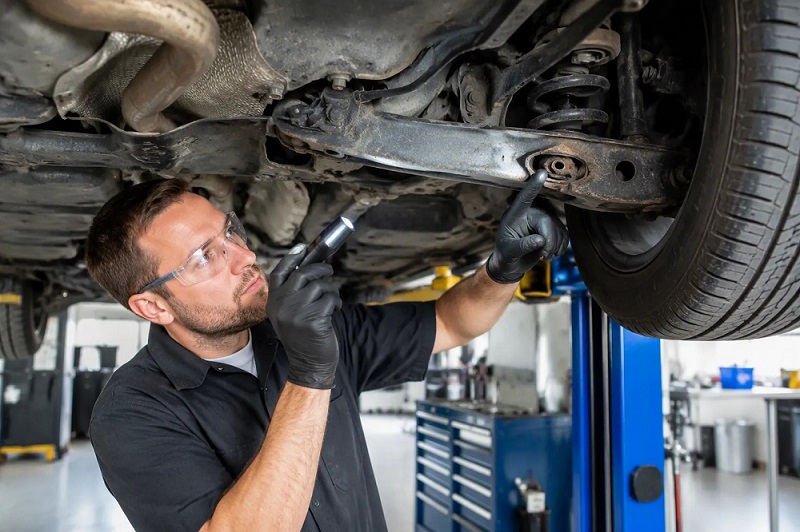
The right decision for your undercarriage depends on the specific components, the extent of wear, and your ownership plans. A damaged undercarriage threatens your safety directly. Steering precision and braking stability degrade. This logic applies to heavy equipment, too. A failing Track Chain on a bulldozer presents the same risk as a worn ball joint on your truck. Choosing poorly costs you twice. You can pay for a repair that fails or spend on a replacement you don't need. Evaluate four factors: damage severity, cost, component type, and vehicle age. The safety of your equipment demands this analysis.
You must evaluate the severity of the damage first. This assessment determines your repair or replacement decision. You need to distinguish between surface issues and structural problems. You also need to separate safety-critical parts from comfort-related ones. Understanding the different types of undercarriage wear helps you make this call.
Surface rust appears as light orange discoloration. This condition affects appearance only. You can monitor it without immediate action. Structural rust, however, shows deep pitting or scaling that removes material. This damage weakens the frame. You must repair or reinforce structural rust. This distinction matters for every undercarriage component.
| Condition | Visual Indicator | Impact | Required Action |
|---|---|---|---|
| Surface rust | Light orange discoloration | Cosmetic only | Monitoring only |
| Structural rust | Deep pitting or scaling that removes material | Weakens the frame | Repair or reinforcement required |
Rust around welds requires special attention. Welds are stress points. Severe corrosion there may demand weld reinforcement or frame repair. Regular wear and tear on your equipment can accelerate this process.
Some undercarriage components affect your safety directly. Others affect ride comfort only. You must prioritize safety-critical parts. A failed track chain can cause sudden loss of movement or steering. A failed idler can lead to track slippage and unintended movement. These failures create serious accidents.
| Undercarriage Part | Consequence of Wear/Failure | Safety Implication |
|---|---|---|
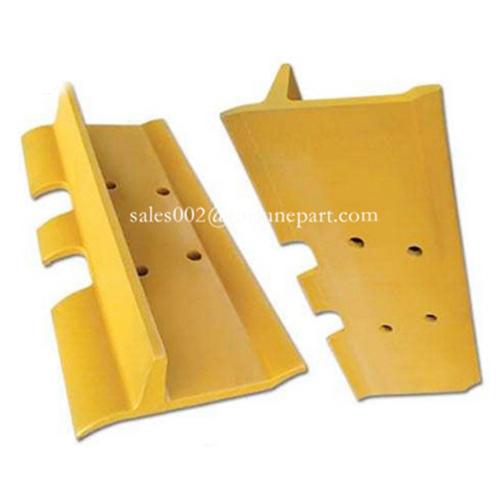
| Track Pads | Decreased traction, increased stress on other components | Reduced grip can lead to loss of control, especially on slopes or soft ground. |
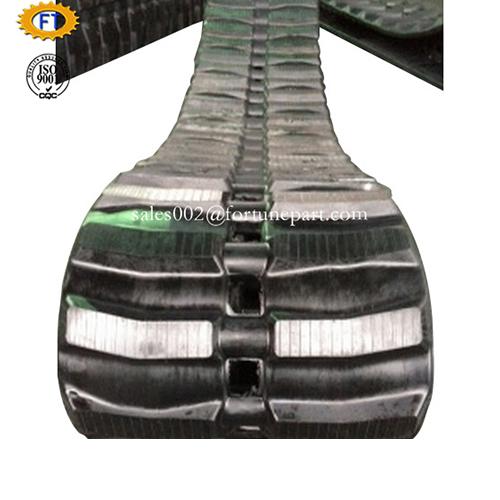
| Track Chain | Machine immobility, uneven spotting on sprockets and rollers | Sudden breakage can cause accidents, loss of ability to move or steer. |
| Track Roller | Increased friction, track derailment or breakage | Derailment can cause sudden loss of stability, risk of tipping. |
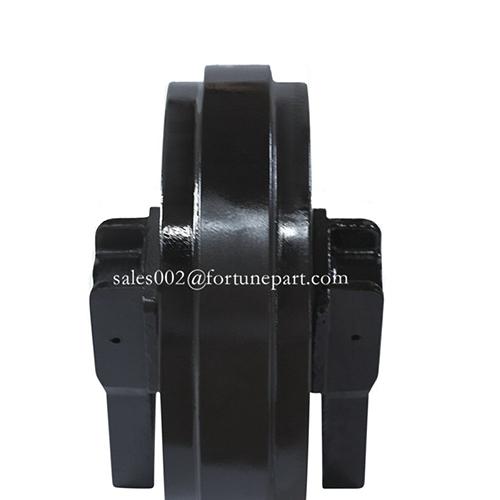
| Idler | Improper track tension, track slippage off sprockets | Slippage affects vehicle stability and mobility, potentially causing unintended movement. |
| Sprocket | Inefficient power transfer, track coming off | Loss of drive power and track detachment can lead to complete loss of control. |
For an excavator or other heavy equipment, a track chain failure puts everyone at risk. You must replace any component showing signs of imminent failure.
Industry standards provide clear measurements for undercarriage wear severity. You can use these numbers to decide. This undercarriage wear severity table shows key indicators for different components.
| Component | Severity Level / Indicator | Standard / Measurement |
|---|---|---|
| Track Shoe | Light | Grounding bar height reduced by <15% |
| Track Shoe | Moderate | Pin hole ovality >3 mm |
| Track Shoe | Severe | Penetrating cracks on the plate body |
| Idler Wheel | Abnormal signs | Inner side rim damage >2× outer side; adjustment screw at limit; bearing temperature >80°C |
| Drive Wheel | Failure warning signs | Radiating cracks at tooth root; peeling area >10% of hardened layer; high-frequency vibration |
| Undercarriage Frame | Structural damage detection | Magnetic particle inspection for cracks; diagonal deviation >3 mm/m; bolt preload loss >20% |
For an excavator undercarriage, measuring pin hole ovality and checking for cracks helps you determine if wear has progressed beyond repair. When measurements exceed these thresholds, replacement is the only safe option. Your equipment requires this level of scrutiny.
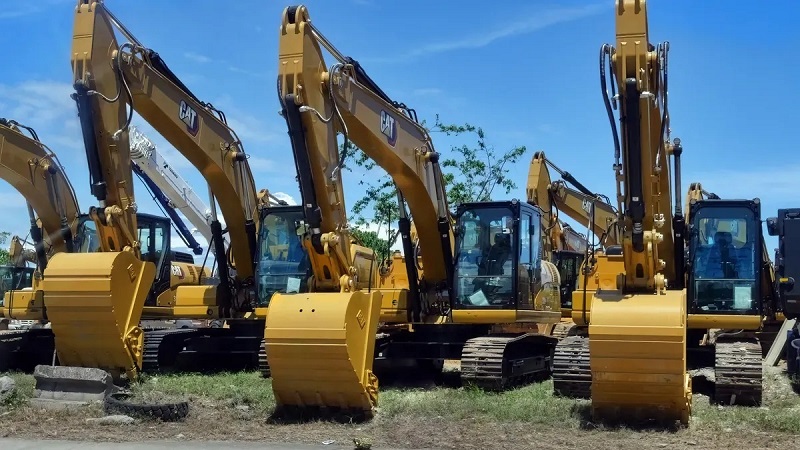
You must compare the full financial picture before deciding. The sticker price on a replacement part often scares owners away. However, the true cost of repeated repairs frequently exceeds that initial quote. Understanding parts pricing, labor rates, and hidden expenses clarifies your decision.
Original Equipment Manufacturer (OEM) parts carry a premium price. Aftermarket components offer significant savings. For your undercarriage, this difference matters. An OEM control arm might cost $400. An aftermarket equivalent could cost $180. The quality gap varies by manufacturer. Some aftermarket brands match OEM durability. Others fail prematurely. You must research the specific brand. For heavy equipment like an excavator, OEM track components often outperform aftermarket alternatives. The harsh operating conditions demand higher-grade materials. Your choice affects long-term reliability.
Replacement requires more labor hours than repair. A bushing replacement might take two hours. Replacing the entire control arm takes four hours. The labor rate multiplies this difference. At $120 per hour, you pay $240 extra. However, that extra labor eliminates future work. A repaired bushing might fail again in 20,000 miles. A new control arm lasts 100,000 miles. You pay more upfront but avoid repeated shop visits. This trade-off defines the repair-versus-replace equation.
Repeated repairs create cascading expenses. Each failed component damages adjacent parts. The following costs accumulate quickly:
| Hidden Cost Category | Specific Impact | Quantified/Qualitative Effect |
|---|---|---|
| Tire Wear | Misalignment causes scrubbing and irregular wear patterns (cupping, feathering, edge wear) | Premature tire retirement; thousands of miles scrubbed off tire life; increased annual tire procurement budget |
| Fuel Efficiency | Increased rolling resistance from misaligned wheels | 1–3% fuel economy loss; substantial wasted fuel over long hauls; cumulative fleet savings from proper alignment |
| Suspension Components | Excessive stress on tie rods, ball joints, shock absorbers | Accelerated degradation; premature mechanical failures; expensive repairs; cascading breakdown effects |
| Unscheduled Downtime | Emergency repairs from undetected undercarriage issues | Direct repair costs plus delayed deliveries and damaged client relationships; proactive alignment checks prevent catastrophic failures |
These hidden costs transform a simple repair into costly repairs. For commercial equipment, downtime adds another layer. Every hour your excavator sits in the shop costs revenue. A proper replacement now prevents this cascade. You save money across the entire ownership period.
Every undercarriage component wears differently. Your repair strategy must match the specific part. Bushings, ball joints, and control arms each demand a unique approach. Understanding the difference saves you money and ensures safety.
Bushings absorb vibration and control suspension movement. They wear gradually. You see cracking, tearing, or excessive play. Rubber bushings degrade from oil contamination and age. Polyurethane bushings resist wear but transmit more noise.
Replacing bushings alone makes sense when the surrounding metal remains intact. You press out the old bushing and press in a new one. This repair costs less than full component replacement. However, labor time adds up. If the bushing bore shows damage or corrosion, replacement of the entire assembly becomes necessary.
For heavy equipment like an excavator, bushing wear in the undercarriage affects track tension and alignment. Regular inspection catches wear before it damages adjacent components. You can extend bushing life through proper lubrication and cleaning. An excavator undercarriage endures constant stress from digging and traveling.
Ball joints connect the steering knuckle to the control arm. They allow rotational movement while supporting vehicle weight. A worn ball joint creates play in the steering. You feel vibration, clunking noises, or uneven tire wear.
You cannot repair a ball joint. The design does not allow bushing replacement. Once the internal clearance exceeds specifications, you must replace the entire joint. This is a safety requirement. A failed ball joint causes the wheel to collapse. The steering loses control completely.
Inspect ball joints during every undercarriage service. Look for torn boots, grease leakage, or loose movement. Replace them at the first sign of excessive play. The cost of replacement is minimal compared to the cost of a failure at highway speed. Premature failure occurs if you ignore these warning signs.
Control arms house both the ball joint and the bushings. When one component fails, the others often show wear too. Replacing only the ball joint may seem cost-effective. However, this approach creates hidden risks.
Many technicians recommend replacing the whole control arm if the vehicle has over 100,000 km (or 60,000 miles), especially if you're already replacing the ball joint—since labor overlaps significantly.
You should consider full replacement when:
Replacing the complete assembly offers several advantages:
When you swap out worn parts on an excavator undercarriage, the same logic applies. A dozer undercarriage benefits from replacing entire track frame assemblies rather than individual components. The labor savings and reliability improvement justify the higher part cost. An excavator operates in harsh conditions that accelerate wear on every undercarriage component.
For your equipment, evaluate each component individually. A bushing repair might suffice for low-mileage vehicles. A ball joint demands replacement. A control arm often requires full assembly replacement. Match your decision to the specific component and its condition.
Struts and shocks control spring oscillation and maintain tire contact with the road. These undercarriage components absorb energy from bumps and potholes. When one shock weakens, the vehicle's handling becomes unbalanced. You feel this imbalance during cornering, braking, and highway driving.
Replacing struts or shocks in pairs ensures consistent damping force on both sides of the axle. A new shock on one side and a worn unit on the other creates uneven performance. The vehicle may pull to one side during braking. Tire irregularities appear. The suspension works against itself, accelerating wear on other parts.
Consider the cost logic. Replacing one shock costs roughly half the parts cost of a pair. However, the labor to install a single shock is nearly identical to installing a pair. The mechanic must access the same mounting points and perform the same steps. Paying labor twice for two separate jobs costs more than doing both sides at once. Replacing in pairs also prevents the need for a second alignment. Most vehicles require an alignment after shock or strut replacement. Doing the job once saves you the alignment fee twice.
The same principle applies to heavy equipment. An excavator undercarriage includes track frame parts that dampen shock loads during digging and traveling. For an excavator, you replace idler wheels and rollers in pairs on the same track frame. This practice maintains even track tension and prevents premature wear during excavator operation. A dozer undercarriage also benefits from matched part replacement. Uneven damping on one side causes the machine to drift during operation.
Safety demands this approach. A single worn shock increases stopping distance by up to 20 feet from 60 mph. The vehicle's body rolls more during emergency maneuvers. The risk of a component failure rises when the suspension system operates under uneven stress. You compromise your safety when you mismatch new and old dampers.
Replacing worn parts in pairs protects your investment. Your equipment operates reliably between service intervals. You avoid the hidden costs of uneven tire deterioration and premature component degradation. Quality equipment lasts longer with proper maintenance. The extra upfront cost for a pair pays for itself through extended service life and consistent performance.
Your vehicle's age and your ownership timeline shape every repair decision. A new truck with 30,000 miles deserves different treatment than a sedan with 180,000 miles. You must align your undercarriage investment with the machine's remaining useful life. This calculation prevents wasted spending on parts you will never use.
Most vehicles last between 150,000 and 200,000 miles. Maintenance quality and driving conditions determine the exact figure. You should compare any repair estimate against your vehicle's current market value. If the repair cost exceeds 50% of that value, replacement makes better financial sense.
Consider a concrete example. Your vehicle is worth $4,000. The undercarriage repair quote arrives at $2,500. You would spend over half the vehicle's value on one component. That investment rarely pays off. Severe corrosion in critical areas compounds this problem. Widespread rust compromises structural integrity. You cannot justify expensive repairs on a compromised frame.
You plan to sell the vehicle within a year. Your strategy shifts toward minimal spending. Focus on safety-critical repairs only. Address issues that prevent safe operation or legal inspection. Skip cosmetic improvements and preventive upgrades.
This approach applies to heavy equipment as well. An excavator nearing the end of its service life requires only essential track chain repairs. You avoid full undercarriage overhauls. You perform the minimum work to keep the machine operational. This strategy preserves capital for your next purchase. You accept some wear and tear as unavoidable at this stage.
You intend to keep your vehicle for another five years or 100,000 miles. Quality replacement parts become the smart investment. Premium components extend service intervals and reduce future breakdowns. Your equipment rewards this approach with consistent performance.
The math supports this decision. A $400 control arm replacement lasts 100,000 miles. A $150 repair might fail at 20,000 miles. You would perform five repairs in the same period. The total cost reaches $750 plus repeated labor charges. Quality replacement saves you money over time.
For your excavator or other heavy equipment, this principle holds true. Invest in OEM-grade track components. Schedule regular undercarriage inspections. Monitor wear patterns carefully. This proactive approach extends component life and prevents catastrophic failures. Your long-term ownership plan justifies the higher upfront expense.
Your maintenance habits directly determine whether you face a simple repair or a costly replacement. Consistent undercarriage maintenance catches problems early. You avoid the chain reaction failures that destroy multiple components at once. A severely worn sprocket will destroy a new track chain in a fraction of its normal lifespan. This domino effect turns a single worn part into a major repair bill.
You must inspect your equipment on a regular schedule. Daily visual walk-arounds reveal bent shoes, oil leaks, and packed material. You check track tension every 250 operating hours. Full wear measurements of all five systems occur every 500 to 1,000 hours. Harsh conditions compress these intervals proportionally.
| Inspection Type | Frequency | Purpose |
|---|---|---|
| Visual walk-around | Daily | Check for bent shoes, oil leaks, packed material |
| Tension check | Every 250 operating hours | Measure and adjust track sag to prevent accelerated roller/idler wear |
| Full wear measurement (all 5 systems) | Every 500–1,000 operating hours | Complete measurement for trending and forecasting replacement |
Standard fleet vehicles require inspection at least every six months. Heavy vehicles in harsh conditions need checks every three months. Early detection transforms your decision. You replace a single bushing instead of an entire control arm assembly.
Preventive maintenance delivers measurable financial returns. Undercarriage components account for 40–50% of total machine maintenance costs. A single replacement can cost $100,000 or more for large excavators. Proactive maintenance extends component life by 50–70%. Well-maintained undercarriages last 4,000–6,000 hours versus 2,000–3,000 hours with poor upkeep.
Every $1 invested in preventive maintenance saves $4–7 in replacement costs. Emergency repairs cost 200–300% more than planned maintenance. Your undercarriage service options expand when you catch wear early.
You extend component life through systematic monitoring techniques. Visual inspections identify visible cracks, loose track bolts, and debris buildup. Wear measurement uses precise gauges against manufacturer charts to detect deterioration trends. Vibration monitoring reveals internal bearing fatigue before mechanical seizure. Seal and lubrication checks catch oil seepage early.
The biggest risk of waiting too long is a chain reaction failure. A severely worn sprocket will destroy a new track chain in a fraction of its normal lifespan.
Regular upkeep prevents costly structural repairs. Trucks with consistent undercoating experience fewer failures. Documented maintenance preserves resale value. Your equipment rewards this diligence with predictable performance and reduced downtime. You make smarter repair-versus-replace decisions because you understand the true condition of every component.
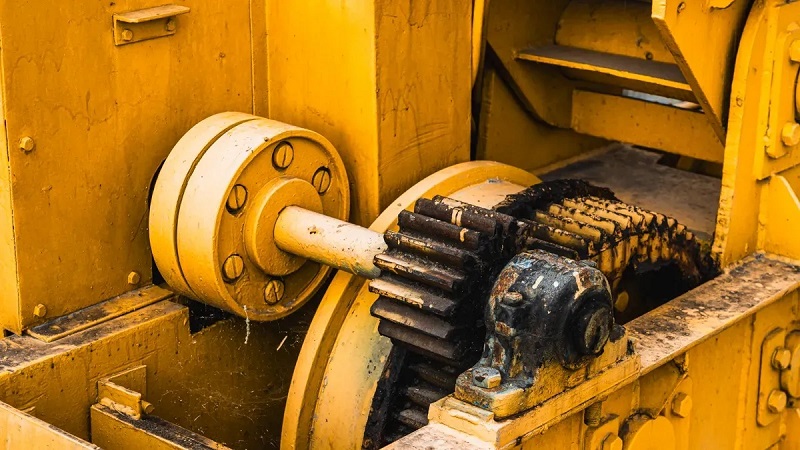
The track chain is the backbone of your excavator or dozer undercarriage. It transfers power from the sprocket to the ground, supporting the machine's entire weight. When this component wears, you face a critical decision. Repairing a worn track chain can save money in the short term. Replacing it ensures reliability. Your choice depends on the severity of wear, the cost of each option, and the safety implications for your equipment.
You must recognize the warning signs before a catastrophic failure occurs. Visual inspection reveals many issues. Performance monitoring catches others. The table below outlines what you should look for during routine checks.
| Visual Sign | Performance Sign |
|---|---|
| Thin or pointed tooth profile (narrow, sharp, hooked, asymmetric) | Progressive tooth-surface wear; verify with OEM criteria |
| Uneven tooth wear (one side differs) | Possible alignment, chain, or operating-pattern issue |
| Cracks, chips, or broken teeth | Prompt service evaluation required |
| Side wear or spalling | Chain path, loading, or component damage |
| Abnormal engagement (bushing does not seat/release smoothly) | Track jumps during operation |
| Clicking or impact near sprocket | Rhythmic noise; indicates chain wear, hardware, debris, or tension issues |
Pins and bushings are critical to track chain service life. Common wear includes external bushing wear, internal pin wear, pitch elongation, loose joints, and uneven articulation. As pins and bushings wear, the effective chain pitch may increase, leading to poor sprocket engagement. This mechanical progression explains why a machine may exhibit performance issues such as track jumping or grinding even when visual wear on the chain exterior is not yet obvious.
You must measure the actual wear before comparing costs. The process requires precision. Follow these steps to determine the pitch elongation rate:
The key indicator for replacement is track pitch elongation – when stretch exceeds 2 percent of original specifications, replacement becomes necessary regardless of hours to prevent sprocket damage and maintain safe operation.
The cost difference between repair and replacement extends beyond parts. Downtime affects your bottom line. A partial repair might cost less initially, but repeated failures create hidden expenses. The decision matrix below helps you evaluate your situation.
| Decision Factor | Partial Repair | Full Track Group Replacement |
|---|---|---|
| Wear distribution | Localized | Widespread |
| Downtime | Shorter initial stop | Longer, but cleaner reset |
| Risk of repeat failure | Higher if adjacent parts are tired | Lower when all wear points are renewed |
| Best use case | Impact damage, single-side issues | End-of-life undercarriage systems |
You cannot repair a track chain that has reached its wear limit. The structural integrity of the links and pins has degraded beyond safe operation. Continuing to run a worn chain risks sprocket damage, track derailment, and sudden failure during operation. These failures create serious safety hazards for operators and nearby workers.
For your excavator undercarriage, replacement becomes mandatory when pitch elongation exceeds the manufacturer's specification. The same applies to your dozer undercarriage. Widespread wear across multiple components signals the end of the chain's service life. You must replace the entire track group to restore safe operation.
The cost of replacement is significant. However, the cost of failure is far higher. A broken track chain can cause the machine to lurch unexpectedly, damaging property or injuring personnel. The downtime from an emergency repair exceeds the planned downtime of a scheduled replacement. For heavy equipment, safety and reliability always justify the investment in a new track chain.
Final Verdict: Your decision rests on three questions. Is the repair safe? Is it cost-effective? Does your equipment's remaining life justify the expense? For safety-critical components like ball joints and track chains, choose replacement. The cost of failure exceeds any parts price. Minor wear on bushings or boots warrants repair, especially on older machines. Always request a written estimate separating parts and labor. Ask your mechanic directly: "If this were your equipment, what would you do?" If repair costs exceed 50% of vehicle value and you plan short-term ownership, replacement wins. This approach minimizes downtime while improving safety and reducing long-term wear and tear. Regular maintenance prevents costly repairs and extends component life.
You should perform a visual walk-around daily. Check for bent components, oil leaks, and debris buildup. Measure track tension every 250 operating hours. Complete full wear measurements every 500 to 1,000 hours. Harsh conditions require more frequent inspections. Early detection of undercarriage wear prevents costly chain reaction failures.
You should replace struts, shocks, and track rollers in pairs. Mismatched components create uneven performance and accelerate wear on the opposite side. The labor cost for one side nearly equals the cost for both sides. Pair replacement saves you money on alignments and prevents premature failure.
Improper track tension causes most premature undercarriage wear. Loose tracks allow excessive movement and impact loading. Tight tracks create friction and accelerate component degradation. You should check tension regularly, especially when moving between jobsites with different ground conditions. Proper tension extends component life by 50 to 70 percent.
You should evaluate the operating conditions of your equipment. OEM parts offer guaranteed fit and durability for harsh environments. Aftermarket parts provide significant savings for lighter applications. Research the specific brand reputation before purchasing. For excavators and dozers operating in severe conditions, OEM components often outperform alternatives.
Your undercarriage service options include partial repair, component replacement, or full track group replacement. Partial repair suits localized damage. Component replacement works for isolated worn parts. Full replacement becomes necessary when pitch elongation exceeds manufacturer specifications. Your decision depends on wear distribution, downtime tolerance, and your equipment's remaining service life.
categories
recent posts
tags
Xiamen Fortune Industrial Co., Ltd.
Room 402,No.7,Kangleli,Huli District, Xiamen, Fujian, China
Tel : 0086 13559245184
Fax : 0086-592-7072790
Whatsapp/Wechat : +8613559245184
Contact Person: James Xie
E-mail: sales@fortunepart.com
Microsoft Teams: part-sales
scan to wechat: