

-
call us
0086 13559245184 -
email us
sales@fortunepart.com
call us
0086 13559245184email us
sales@fortunepart.com
Sep, 2026
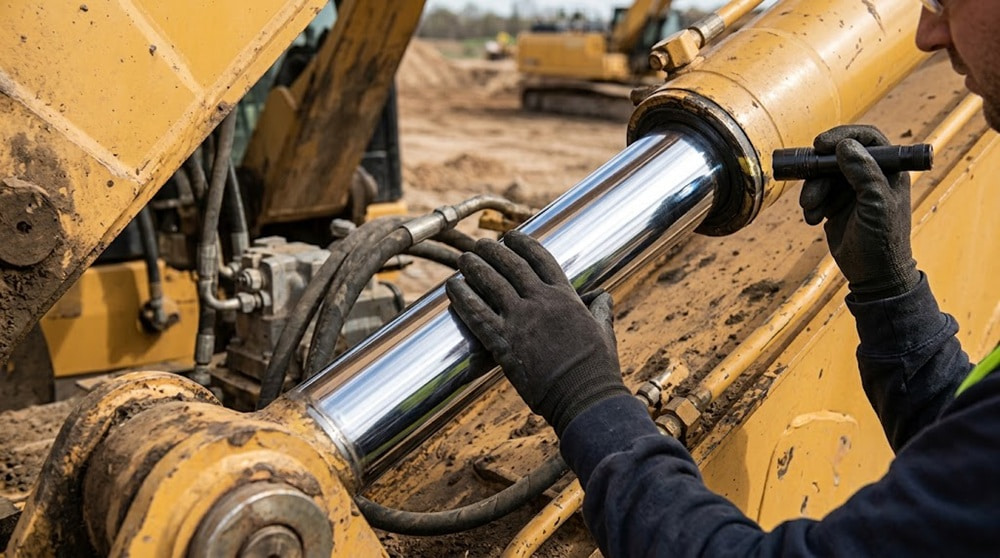
Hydraulic cylinders are the muscles of heavy machinery. Every time an excavator digs, a dozer pushes, or a loader lifts, the movement comes from a cylinder extending and retracting. When a cylinder fails, the machine stops, and downtime on a job site is expensive. Choosing a replacement Hydraulic Cylinder is not simply a matter of finding one that looks similar, because bore size, rod diameter, stroke, and mounting style all have to match the machine and the work it does. This guide explains how cylinders work, what to check before buying, and how to keep them running longer.
A hydraulic cylinder converts hydraulic pressure into linear force. The main parts are the barrel, the piston, the rod, the end caps, and the seals. Pressurized oil enters through one port and pushes the piston, which moves the rod in or out. The rod extends when oil pushes on the piston side, and retracts when oil pushes on the rod side. The force a cylinder produces depends on the pressure and the piston area, while the speed depends on the oil flow.
Cylinders on construction machines work in hard conditions. They absorb shock loads, work under high pressure, and operate outdoors in dust, mud, and temperature changes. The seals keep the oil inside and the dirt outside, and they are usually the first parts to wear. Understanding the basic construction helps when you compare cylinders and when you describe a problem to a supplier.
Most cylinder problems develop gradually, and early detection saves both repair cost and downtime. Watch for these signs during daily inspection:
A small external leak is a warning, not a reason to keep working until the oil runs out. Worn seals let contamination enter the cylinder, and contaminated oil can damage the piston, the barrel, and even the main hydraulic pump. Repairing a leaking cylinder early is almost always cheaper than replacing it or repairing the pump.
Cylinders may look alike from the outside, but the internal dimensions decide the force and the speed. Confirm each point below with the supplier before ordering.
| Item | What to Confirm | Why It Matters |
|---|---|---|
| Bore diameter | Inside diameter of the barrel | Bore size determines the force the cylinder can produce |
| Rod diameter | Outside diameter of the piston rod | Rod size affects strength, buckling resistance, and seal fit |
| Stroke length | Maximum travel of the rod | Stroke must match the movement range of the linkage |
| Mounting style | Pin eyes, flanges, or clevis ends on both ends | The wrong mounting style will not fit the machine linkage |
| Working pressure | Rated pressure range of the system | The cylinder must be rated for the machine hydraulic pressure |
| Port size and position | Port thread size and orientation | Hoses must connect without interference or adapters |
If the old cylinder can be measured, that is the fastest way to confirm the specification. Measure the rod diameter, the barrel outside diameter, the fully extended and fully retracted lengths, and the pin eye sizes. Take photos of the old nameplate if one exists, since many machines stamp the part number on the cylinder body.
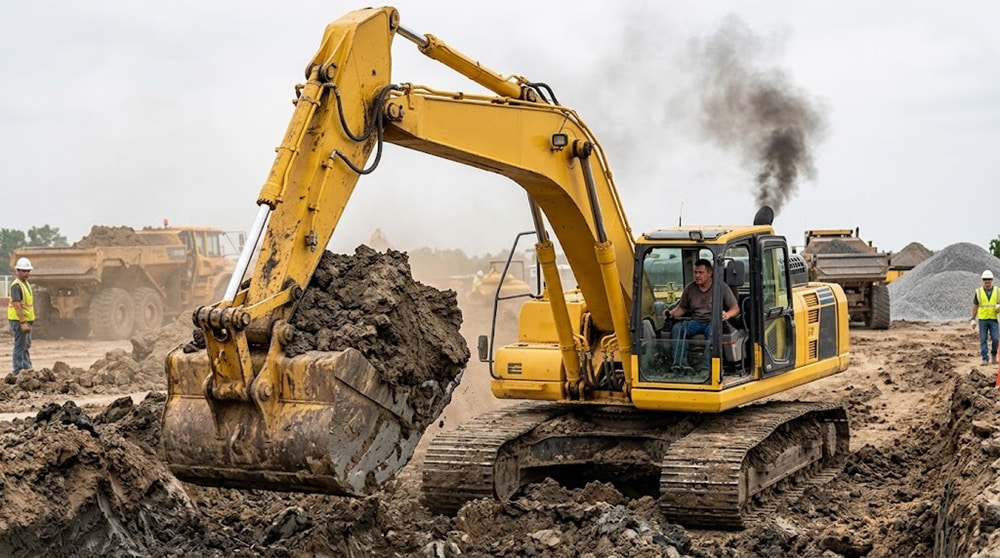
The same machine uses several different cylinders. On an excavator, the boom cylinder lifts the boom, the stick cylinder moves the arm, and the bucket cylinder curls the bucket. On a dozer, the lift cylinders raise and lower the blade, while tilt and ripper cylinders control other attachments. Each cylinder has its own bore, rod, stroke, and mounting geometry, so a boom cylinder cannot simply be swapped for a bucket cylinder.
Machines like the Komatsu PC200-7 use dedicated boom, stick, and bucket cylinder assemblies, and replacements need to match the original layout closely. That is why experienced operators compare the mounting dimensions and stroke carefully, and why the Bulldozers Hydraulic Cylinders range is organized around the machine model and the cylinder position, so the correct unit can be identified before ordering.
Two cylinders with the same dimensions can have very different lives depending on the seal quality and the rod surface. The rod is the part that extends into the dust and weather, and its chrome surface must be smooth and hard. A scratched rod destroys seals quickly, which is why rod protection is a maintenance priority.
The seal kit is the heart of the cylinder. Piston seals separate the two oil chambers, rod seals keep oil inside and dirt outside, and wiper seals clean the rod as it retracts. When buying a replacement cylinder or a seal kit, check the seal material and the brand. Quality seals cost more at the start but usually save money across the service life.
| Failure Sign | Likely Cause | Recommended Action |
|---|---|---|
| External oil leak at the rod | Worn or damaged rod seal | Replace the seal kit and check the rod surface for scratches |
| Slow or weak movement | Internal leakage past the piston seal | Test the cylinder and replace the seal kit if internal leakage is found |
| Attachment drifts down | Internal leakage or valve issue | Check cylinder leakage first, then the control valve |
| Knocking or jerky motion | Air in the system or worn components | Bleed the system; inspect the rod and barrel for wear |
| Bent rod or damaged mounts | Overload or impact damage | Straightening is unreliable; evaluate replacement |
Keeping the rod clean and protected is the simplest way to extend cylinder life. Wipe the rod after work in dusty conditions, avoid using the rod as a step, and fix small leaks before they become large ones.
When the time comes to order, prepare the following details so the supplier can identify the correct cylinder:
For large and heavily loaded machines such as the Caterpillar E320DL, E330D, E336DL, and E345D excavators, the boom and arm cylinders carry extreme loads and work in continuous cycles. Machine owners usually look for heavy-duty construction with strong rods and reliable seals, and assemblies such as the Heavy Duty Hydraulic Lift Cylinder show the difference in build quality between a standard unit and one designed for demanding cycles. Ask about the rod material, the seal brand, and whether the cylinder is tested under pressure before delivery.
Cylinder maintenance is simple and mostly about cleanliness and observation. The following practices are recommended:
A small amount of attention each day prevents most cylinder failures. Most premature cylinder replacements come from ignored leaks, damaged rods, and contaminated oil, all of which are avoidable with basic care.
Use the machine model and the original part number first. If the part number is missing, measure the bore, rod, stroke, and mounting dimensions, and confirm them with the supplier.
Often yes, if the barrel and rod are in good condition. A seal kit replacement can restore a cylinder at a fraction of the cost of a new unit.
Internal leakage past the piston seal is the most common cause. Have the cylinder tested, and check the control valve if the cylinder is sound.
They have different bore, rod, stroke, and mounting dimensions because each one moves a different linkage with a different load and range.
Quality varies by manufacturer. Compare the rod material, seal brand, and testing process, and choose a supplier who can confirm the specification and provide support.
The hydraulic cylinder is one of the most stressed components on any excavator, dozer, or loader. Confirm the bore, rod, stroke, and mounting details before ordering, protect the rod and seals during operation, and fix leaks early. With the right cylinder and simple daily care, the machine keeps its full digging and lifting power for many more working hours.
Contact fortunepart.com with your machine model and the cylinder position or part number, and we will help you confirm the right hydraulic cylinder before you order.
categories
recent posts
tags
Xiamen Fortune Industrial Co., Ltd.
Room 402,No.7,Kangleli,Huli District, Xiamen, Fujian, China
Tel : 0086 13559245184
Fax : 0086-592-7072790
Whatsapp/Wechat : +8613559245184
Contact Person: James Xie
E-mail: sales@fortunepart.com
Microsoft Teams: part-sales
scan to wechat: